
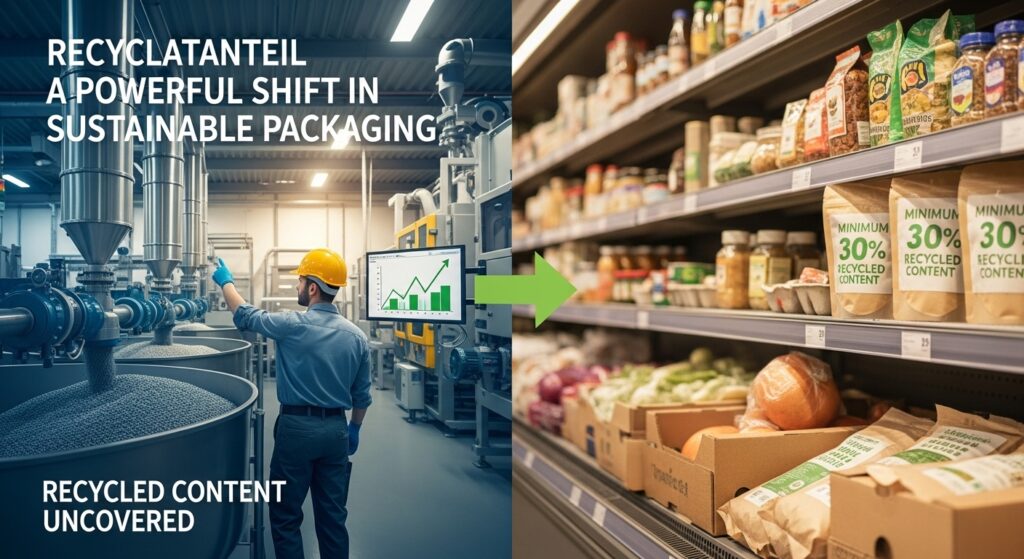
As sustainability moves from a marketing buzzword to a business imperative, one concept is gaining rapid momentum across manufacturing, packaging, and consumer goods industries: Recyclatanteil. Though the term may sound technical, its impact is anything but. Recyclatanteil represents a fundamental shift in how products are designed, produced, and evaluated for environmental responsibility.
This article uncovers what Recyclatanteil really means, why it matters more than ever, and how it is reshaping the future of sustainable packaging worldwide.
What Is Recyclatanteil?
Recyclatanteil is a German term that translates to “recycled content share.” In practical terms, it refers to the percentage of recycled material used in a product or its packaging, compared to virgin (newly produced) raw materials.
For example, a plastic bottle with a Recyclatanteil of 50% contains half recycled plastic and half virgin plastic. This simple metric has become a powerful indicator of sustainability performance, especially in packaging-heavy industries.
Why Recyclatanteil Matters in Sustainable Packaging
Packaging waste is one of the largest contributors to global pollution. Governments, consumers, and investors are now demanding measurable action—not vague commitments. Recyclatanteil provides exactly that: a clear, verifiable sustainability benchmark.
Key Reasons Recyclatanteil Is Critical
-
Reduces dependence on virgin materials, conserving natural resources
-
Lowers carbon emissions associated with raw material extraction and production
-
Strengthens the circular economy, keeping materials in use longer
-
Improves brand credibility through transparent sustainability metrics
-
Helps companies comply with regulations and environmental standards
Unlike abstract sustainability claims, Recyclatanteil can be measured, audited, and improved over time.
The Global Push Behind Recyclatanteil
Regulatory Pressure
Across Europe and beyond, legislation is accelerating the adoption of recycled content requirements. Many regions now mandate minimum recycled content percentages in packaging, particularly for plastics.
Failure to meet these requirements can result in:
-
Fines or penalties
-
Restricted market access
-
Reputational damage
As a result, Recyclatanteil is no longer optional—it’s becoming a compliance necessity.
Consumer Expectations
Modern consumers are increasingly eco-conscious. They actively look for labels and claims that prove environmental responsibility. Products highlighting a high Recyclatanteil often enjoy:
-
Higher trust
-
Stronger brand loyalty
-
Competitive differentiation on crowded shelves
Transparency has become a deciding factor in purchasing behavior.
Recyclatanteil vs. Recyclability: A Key Distinction
One of the most common misconceptions is confusing recyclability with recycled content.
-
Recyclability means a product can be recycled
-
Recyclatanteil means recycled material is already being used
A package can be 100% recyclable but still contain 0% recycled material. Recyclatanteil focuses on real impact, not theoretical potential.
Materials Most Affected by Recyclatanteil Standards
Plastics
Plastic packaging is at the center of the Recyclatanteil movement. Common materials include:
-
rPET (recycled polyethylene terephthalate)
-
rHDPE (recycled high-density polyethylene)
-
rPP (recycled polypropylene)
Brands are increasingly advertising exact percentages to demonstrate accountability.
Paper and Cardboard
Paper-based packaging often has a higher Recyclatanteil, but challenges remain in:
-
Food-safe applications
-
Strength and durability
-
Ink and coating compatibility
Even here, higher recycled content is becoming a competitive advantage.
Glass and Metal
Glass and aluminum are highly recyclable and can often contain very high recycled content, sometimes exceeding 80–90%. These materials set the benchmark for circularity.
Challenges in Increasing Recyclatanteil
Despite its benefits, increasing recycled content is not without obstacles.
Quality and Consistency
Recycled materials can vary in:
-
Color
-
Strength
-
Purity
Maintaining product quality while increasing Recyclatanteil requires advanced processing and strict quality control.
Supply Chain Limitations
Demand for high-quality recycled materials is rising faster than supply. This can lead to:
-
Higher costs
-
Limited availability
-
Increased competition among manufacturers
Technical Constraints
Certain products—especially in food, medical, or pharmaceutical packaging—face strict safety regulations that limit the use of recycled materials.
How Brands Are Adapting
Forward-thinking companies are turning Recyclatanteil into a strategic advantage rather than a burden.
Design for Recycling
Packaging is now being designed with:
-
Fewer material layers
-
Easier separation
-
Improved recyclability
This ensures better-quality recycled material for future use.
Investment in Recycling Infrastructure
Many brands are:
-
Partnering with recycling firms
-
Funding collection systems
-
Supporting closed-loop recycling programs
These efforts help stabilize recycled material supply.
Transparent Communication
Clear labeling such as:
-
“Contains 60% recycled plastic”
-
“Made with post-consumer recyclate”
builds trust and aligns marketing with measurable impact.
Recyclatanteil and the Circular Economy
At its core, Recyclatanteil supports the circular economy, where materials are reused rather than discarded. Each increase in recycled content:
-
Reduces landfill waste
-
Decreases environmental degradation
-
Keeps valuable materials in circulation
This shift transforms packaging from waste into a renewable resource.
The Business Case for Recyclatanteil
Beyond sustainability, Recyclatanteil makes strong business sense.
Competitive Advantage
Brands that act early often:
-
Win eco-conscious customers
-
Strengthen partnerships with retailers
-
Gain regulatory goodwill
Long-Term Cost Stability
While recycled materials may be expensive today, reliance on virgin resources exposes businesses to:
-
Price volatility
-
Resource scarcity
-
Regulatory risks
Recyclatanteil is an investment in long-term resilience.
The Future of Recyclatanteil
Looking ahead, Recyclatanteil is expected to:
-
Become a standard packaging metric worldwide
-
Be digitally tracked through product passports
-
Influence investor and ESG evaluations
-
Drive innovation in material science
What started as a technical term is evolving into a core indicator of corporate responsibility.
Conclusion
Recyclatanteil is more than a percentage—it’s a mindset shift. It represents a move from linear consumption to circular responsibility, from promises to proof, and from waste to value.
As sustainable packaging continues to evolve, companies that embrace higher Recyclatanteil today will shape the standards of tomorrow. For brands, regulators, and consumers alike, recycled content is no longer a niche concern—it’s the foundation of a more sustainable future.