
Introduction
If you’ve ever come across the phrase “ehi vuoi da bere” and wondered what it means, you’re not alone. This simple Italian sentence pops up in both casual conversation and pop culture. In this article, I’ll walk you through what “ehi vuoi da bere” means, its context in Italian society, and how you can use it appropriately. Let’s explore the cultural richness behind these words.
The Meaning of “Ehi Vuoi Da Bere”
Literal Translation
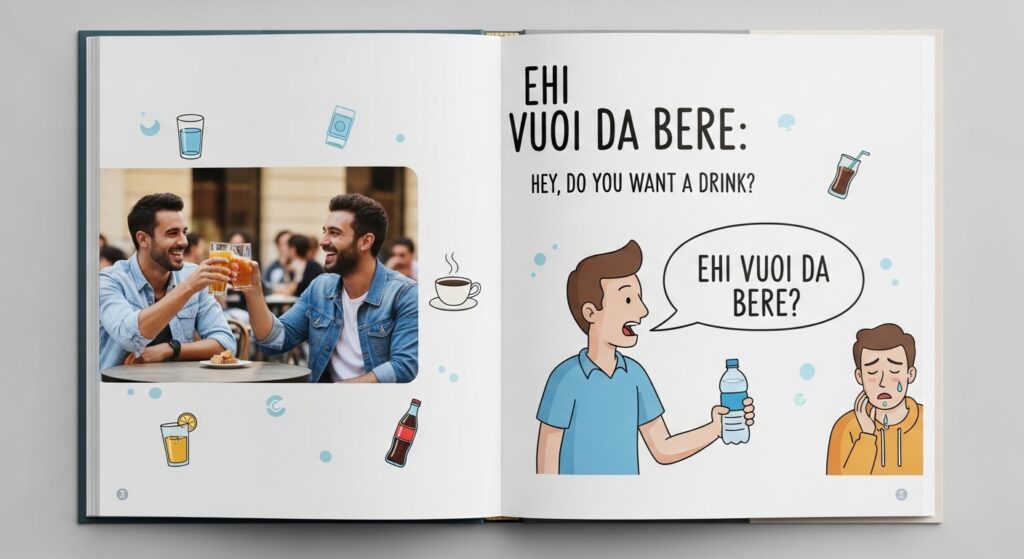
“Ehi vuoi da bere” translates in English to “Hey, do you want something to drink?” or more simply, “Hey, want a drink?” Each word has a specific purpose:
- Ehi: An informal way to grab attention, much like “Hey!” in English.
- Vuoi: The second person singular form of the verb “volere,” meaning “to want” in English.
- Da bere: Literally translates as “to drink,” referring to any kind of beverage.
Common Contexts
It’s the type of question you’d hear at a party, a family gathering, or maybe at a café when one friend offers another something to drink. The vibe is casual and friendly, and it’s a staple of Italian hospitality.
Social Etiquette and Usage in Italy
Everyday Conversation
I often hear this phrase when Italians host guests or socialize. Offering a drink is a simple yet significant gesture in Italy, closely tied to warmth and good manners. From espresso to sparkling water, the offer shows attentiveness and welcome.
When Should You Use It?
- At Home: If friends visit, it’s polite to ask if they’d like something to drink
- At Cafés or Bars: Friendly banter between acquaintances
- At Events: Parties or celebrations almost always start with this offer
How to Respond to “Ehi Vuoi Da Bere”
Casual Answers
- “Sì, grazie!” – “Yes, thank you!”
- “No, grazie.” – “No, thank you.”
- “Cosa hai?” – “What do you have?”
If you’re unsure what’s on offer, it’s common to ask what drinks are available. That can lead to an even friendlier exchange, where the host lists options with pride!
Appearances in Italian Pop Culture
TV, Music, and Film
Sometimes, “ehi vuoi da bere” appears in Italian songs, TV dialogue, or movies to quickly establish a scene’s informal, social spirit. It’s shorthand for relaxation and camaraderie. Certain commercials or internet memes have even played with the phrase’s friendly simplicity.
The Internet and Social Media
On social media, sometimes you’ll see this phrase used jokingly or as a meme—someone posting a picture from a party with the caption “ehi vuoi da bere” to evoke that easygoing, welcoming mood Italians are known for.
The Impact of Hospitality in Italian Culture
History and Tradition
Italian hospitality is world-famous, and there’s a cultural expectation to take care of your guests. The phrase “ehi vuoi da bere” is a small but meaningful way of expressing that openness. It’s a tradition rooted in daily life from north to south, urban to rural settings.
Inclusion and Warmth
If you’re traveling in Italy and you hear this phrase, you’re being treated as a guest and a friend. Saying yes to a drink often opens the door to deeper conversation and connection. It’s part of the authentic Italian experience.
Fun Facts and Language Tips
- Regional Varieties: In some regions of Italy, people might swap out “ehi” for “ciao” or “oh”—but the intention remains the same.
- Non-Alcoholic Choices: While many associate “want a drink?” with wine or cocktails, in Italy it’s just as likely to mean water, coffee, or juice.
- Politeness Counts: Never forget to say “grazie” (thank you) after accepting or declining!
Conclusion: “Ehi Vuoi Da Bere” in Daily Life
Whether you’re aiming to brush up your Italian before a trip, or you just want to sound welcoming at home, “ehi vuoi da bere” is a phrase worth remembering. It captures the heart of Italian hospitality—openness, kindness, and a shared drink to start a beautiful conversation. Next time you hear it, you’ll know just how to respond—and how much meaning is poured into those simple words.