
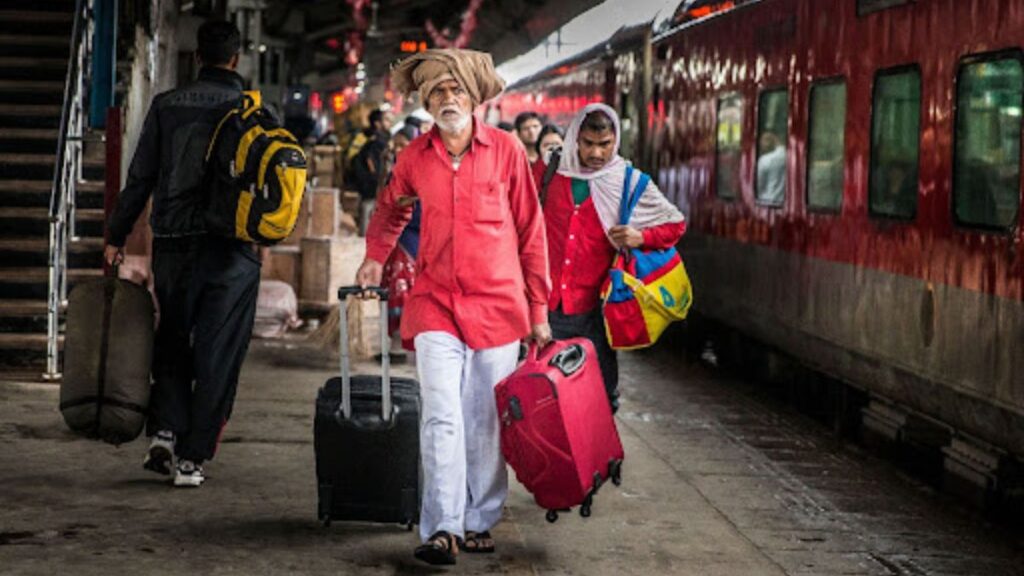
India’s rail network stretches over 68,000 kilometers, carrying more than 20 million passengers daily. But beyond the crowded commuter routes lies something quieter—a world of slow travel that opens windows into communities most tourists never see. Railway tourism in India isn’t just about reaching a destination. It’s about everything that unfolds along the way.
https://www.pexels.com/photo/8973669/
A Network Built on Stories
Every railway line in India tells a story. Some routes were built by colonial engineers in the 1850s, others by maharajas wanting to connect their kingdoms to the wider world. The tracks themselves carry traces of this layered past.
Take the Kalka-Shimla railway. Carved into the Himalayan foothills over a century ago, it climbs through 102 tunnels and crosses 864 bridges. Riders pass through pine forests, tiny villages, and colonial-era stations that look frozen in time. The journey takes hours longer than driving would, yet thousands choose it anyway.
Train Travel India: Slowing Down to See More
Speed isn’t really the point here. When you travel by train through rural India, you notice things a plane or highway would hide completely. Farmers waving from fields. Children running alongside the tracks. Tea sellers shouting through open windows at every stop.
This is slow travel India at its finest—unhurried, observant, and deeply human. A flight from Delhi to Varanasi takes ninety minutes. The train takes most of the day. But that extra time? It’s filled with conversations, shared meals, and glimpses of life that no itinerary could plan.
Indian Railway Routes That Double as History Lessons
Some Indian railway routes function almost like open-air museums. The Darjeeling Himalayan Railway, often called the “Toy Train,” was built in 1881 and still uses steam locomotives on certain runs. UNESCO recognized it as a World Heritage Site, and riding it feels like stepping into a different century.
Then there’s the Konkan Railway along India’s western coast. Completed in 1998 after decades of engineering challenges, it weaves through dense forests, past Portuguese-era churches, and alongside fishing villages where Goan and Maharashtrian traditions blend. Passengers catch sight of spice plantations, ancient forts, and coastal temples—all visible from a train window.
Regional History India: Tracks That Connect the Past
Railway tourism in India often becomes accidental history education. The Nilgiri Mountain Railway in Tamil Nadu, built between 1891 and 1908, was an engineering marvel of its time, using a rack-and-pinion system to climb steep gradients. Today it passes through tea estates that have shaped the regional economy for over 150 years.
Meanwhile, the Palace on Wheels in Rajasthan recreates the luxury train experience once reserved for royalty. Each carriage was originally used by a different princely state. Traveling on it, passengers move through desert landscapes, visit forts in Jodhpur and Jaisalmer, and get a sense of how Rajasthan’s regional history shaped its architecture, cuisine, and customs.
Hidden Destinations India: Stations Off the Beaten Path
Some of the most rewarding hidden destinations India has to offer aren’t destinations at all—they’re stops along the way. Ooty, a hill station in Tamil Nadu, remains relatively quiet compared to its more famous neighbors, yet the Nilgiri railway journey there is considered one of the most scenic in the country.
Or consider Matheran, near Mumbai, where vehicles are banned entirely. The only way in (besides walking) is a narrow-gauge train that chugs slowly through forested hills. Few foreign tourists know about it, but locals treasure it as a weekend escape from the city’s chaos.
Planning multi-leg train journeys often means juggling fares, distances, and conversion rates—especially for international travelers comparing ticket prices in different currencies. A math answer AI can come in handy here, helping quickly calculate total trip costs, split group expenses, or convert kilometers to miles when reading route maps. It’s a small thing, but it removes some of the friction from trip planning.
Cultural Tourism India: More Than Monuments
Cultural tourism India usually focuses on temples, palaces, and museums—and rightfully so. But trains add another layer entirely. Stations themselves become cultural touchpoints. Chhatrapati Shivaji Terminus in Mumbai, built in 1887, blends Victorian Gothic architecture with Indian design elements so seamlessly that it earned UNESCO World Heritage status in 2004.
Food vendors on platforms sell regional specialties you might not find elsewhere. In West Bengal, expect rolls and tea served in clay cups. In Tamil Nadu, vendors might offer idli or vada wrapped in banana leaves. These small interactions, repeated across thousands of kilometers, build a patchwork understanding of India’s diversity that guidebooks rarely capture.
Travel Experiences India: What Makes Rail Journeys Memorable
Ask anyone who has taken a long-distance train in India, and they’ll likely mention the people. Sharing a compartment for twelve, eighteen, or even thirty hours creates unexpected friendships. Strangers become temporary companions, swapping snacks, stories, and sometimes phone numbers.
These travel experiences India offers aren’t curated by tour operators. They happen organically—a grandmother offering homemade pickles, a college student practicing English, a vendor calling out “chai, chai, chai” at 6 a.m. For many travelers, these moments become the highlight of their entire trip, more memorable than any monument.
Why Railway Tourism in India Deserves More Attention
Railway tourism in India connects people to places in ways that feel increasingly rare. With over 7,300 stations across the country, the network reaches corners that highways and airports simply don’t touch. Each route carries its own rhythm, shaped by geography, history, and the communities that grew up alongside the tracks.
Whether it’s the misty hills of Darjeeling, the coastal stretches of Konkan, or the desert routes of Rajasthan, these journeys offer something increasingly valuable: time. Time to look out the window. Time to talk to a stranger. Time to actually see the country, one slow mile at a time.
For travelers willing to trade speed for substance, India’s railways offer a front-row seat to history, culture, and everyday life—all rolled into one ticket.