
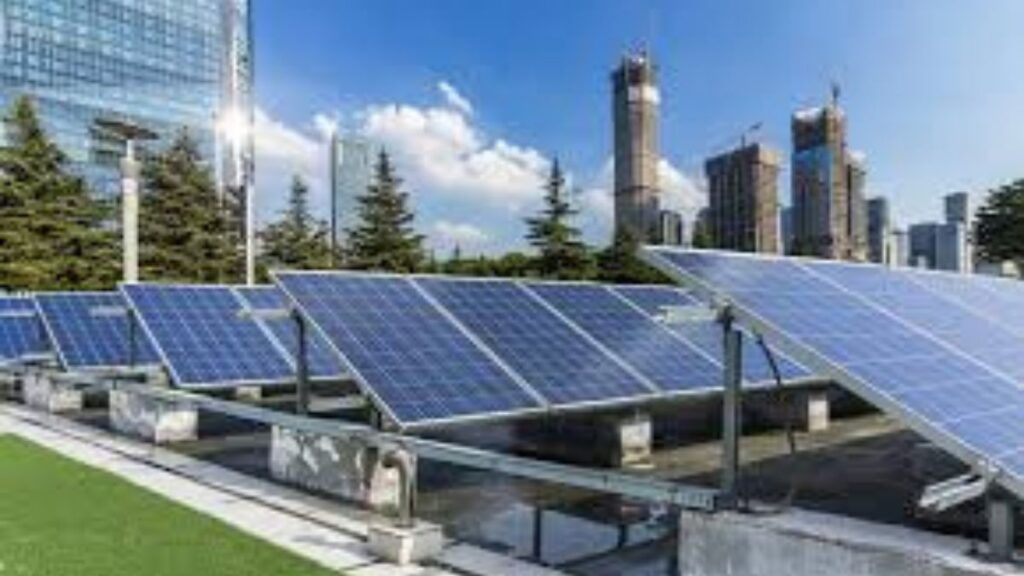
Energy expenditure remains one of the most significant operational liabilities for commercial and industrial property owners. Regulatory compliance, escalating utility tariffs, and corporate sustainability commitments have collectively pushed solar adoption from a capital improvement option to a procurement priority. For facility managers and asset owners, the decision is rarely whether to deploy commercial solar roof systems, it’s which technology will actually perform given the structural realities of their portfolio.
That distinction matters more than most procurement teams anticipate.
What Glass Panels Promise vs. What They Deliver
Conventional glass-encapsulated PV panels for commercial buildings have traditionally relied upon to arrive with a strong efficiency track record. On paper, the specifications are compelling. On a real rooftop, the constraints compound quickly.
Structural Limitations of Traditional Glass Solar Panels
Standard glass modules add considerable weight per panel. When multiplied across a warehouse roof spanning large surface areas, and combined with the aluminum racking and ballast required for wind resistance, the cumulative dead load can become a structural engineering concern before it becomes an energy solution. Industry assessments suggest that many commercial and industrial buildings may require structural evaluation or reinforcement before supporting traditional glass solar systems, which can increase overall project complexity and cost.
Why Traditional Commercial Solar Roof Systems Face Installation Challenges
Beyond load capacity, glass panels are dimensionally rigid. They require long, unobstructed straight rows to install efficiently, making them functionally incompatible with roofs featuring skylights, HVAC units, drainage channels, or curved profiles. Older buildings, logistics hubs, greenhouses, and stadiums, all prime candidates for solar generation given their roof area, can face limitations because of this rigidity. Installation itself compounds the problem: hauling glass panels onto occupied commercial structures, constructing racking systems, and drilling penetrations through waterproofing membranes can interrupt operations for extended periods.
Semi-flexible panels were positioned as a middle-ground solution, but they retain a critical vulnerability, silicon wafer cells that may remain susceptible to micro-cracking under mechanical stress, potentially limiting durability in high-vibration or thermally dynamic environments.
What Flexible Systems Deliver Differently
Many leading commercial solar roof systems in recent years have moved away from glass and silicon wafer substrates entirely, adopting polymer-encapsulated fully flexible cell architectures engineered specifically for commercial and industrial deployment.
At the structural level, these systems are significantly lighter than many traditional glass alternatives. For load-restricted rooftops, that difference can reduce or eliminate the need for structural reinforcement before installation can begin. Adhesive bonding replaces mechanical fastening, removing roof penetration as an installation requirement and helping preserve waterproofing integrity across the entire surface.
Adaptability for Complex Commercial Roof Structures
PV panels for commercial buildings with non-standard roof geometries, curved profiles, polycarbonate panels, and metal standing seam roofs, full flexibility means the panel conforms to the surface rather than requiring the surface to conform to the panel. Custom layouts can navigate obstructions, drainage lines, and architectural features without sacrificing coverage area.
Durability in this technology class is achieved through shatterproof-style cell construction with enhanced microcrack tolerance, a specification difference that separates truly flexible panels from their semi-flexible predecessors. The result is a system designed to sustain performance across temperature cycling, wind stress, and long-term UV exposure while reducing some of the brittleness concerns associated with glass.
Reduced Installation Disruption for Commercial Operations
Installation timelines can also be reduced. Systems designed for commercial rooftops in this category may be deployed with less operational disruption, helping reduce labor demands and minimizing interruptions that can delay solar project approvals at the executive level.
For decision-makers evaluating commercial solar roof systems across a diverse property portfolio, flexible panel technology represents an architecture that can help reduce structural limitations, not just add renewable capacity where conditions are already favorable.
FAQs
Does lower panel weight affect energy output or system efficiency?
Weight reduction in advanced flexible systems is achieved through changes in encapsulation material, not necessarily through changes in core cell technology. Fully flexible commercial panels can deliver efficiency levels comparable to many standard glass monocrystalline modules. Procurement decisions should be evaluated on a watt-per-square-metre basis against available roof area, not on weight as a standalone indicator of performance.
How do adhesive-mounted systems hold up against wind uplift and extreme weather?
Commercial-grade flexible panels designed for rooftop deployment are commonly tested against wind stress, hail impact, and thermal cycling. The adhesive bond, when applied across the full panel footprint on a properly prepared surface, may distribute wind uplift loads more evenly than point-fastened racking systems. Independent structural assessment of the specific roof substrate remains advisable prior to installation.
What happens to the investment if the building’s roof membrane needs replacement mid-lifecycle?
Unlike penetration-mounted systems, adhesive-bonded flexible installations can often be removed and reinstalled with less structural disruption. This can also make them more compatible with phased roof refurbishment schedules, a practical advantage for commercial solar roof systems deployed across aging building stock where membrane replacement may become necessary in the future.